
Selling from Malaysia to the UAE is more accessible than most sellers expect. You do not need a UAE company or a Dubai trade license to start.

What Does Cross-Border Ecommerce Between Malaysia and the UAE Actually Involve?
Cross-border ecommerce from Malaysia to the UAE means listing products on UAE-facing platforms — or your own website — and shipping from Malaysia into one of the UAE’s seven emirates, most commonly Dubai or Abu Dhabi.
The UAE is a high-value destination. Consumer spending per capita is among the highest in the GCC region, the population is heavily import-dependent for consumer goods, and English is widely used in commerce. For Malaysian sellers in categories like fashion, electronics accessories, health and beauty, and halal food products, the UAE presents a genuine opportunity.
Two legal frameworks run simultaneously. In Malaysia, you need a valid SSM registration and must comply with customs export requirements. In the UAE, your shipments face import duties, and your revenue may eventually trigger VAT registration requirements. UAE import regulations also include product compliance standards for specific categories: electronics, cosmetics, and food products each face their own approval processes.
The good news: for most Malaysian sellers at early to mid-stage revenue, the compliance path is manageable without a UAE business entity. Marketplace programs on Noon and Amazon.ae handle customs clearance and local fulfilment on your behalf. The hurdles are real, but not extraordinary.
What Malaysian Registration Do You Need Before Selling Cross-Border to the UAE?
Your Malaysian business must be properly registered before you export goods internationally.
Under Malaysia’s Registration of Businesses Act 1956, any person carrying on business must register with SSM (Suruhanjaya Syarikat Malaysia) . This applies whether you sell domestically or internationally. Exporting goods does not waive the registration requirement — it adds to it.
For sole proprietors, SSM registration via the ezbiz portal costs RM 30 to RM 60 and typically completes within one business day. For a Sdn Bhd (private limited company), total registration costs typically fall between RM 1,000 and RM 3,000 including company secretary fees, with a minimum 24-hour processing window. See our SSM registration guide for the full process.
If you plan to invoice UAE companies directly or participate in UAE government tenders, a Sdn Bhd typically carries more credibility than a sole proprietorship. UAE B2B buyers often prefer dealing with incorporated entities. For B2C marketplace selling to UAE consumers, a sole proprietorship registration works fine.
Before exporting, confirm your MSIC (Malaysian Standard Industrial Classification) code registered with SSM. If your current code covers only domestic retail (code 47913 and related), add an export or wholesale activity code that covers your product type. This is a minor administrative step but becomes relevant during audits.
For SST (Sales and Service Tax) in Malaysia: the mandatory registration threshold is RM 500,000 in taxable annual turnover. UAE export sales count toward this total. If you are approaching that threshold, review our SST guide for ecommerce sellers in Malaysia before processing significant cross-border volume.

Do You Need a UAE Trade License or Business Entity to Sell to UAE Customers?
This is the question most Malaysian sellers ask first. The answer depends on how you plan to reach UAE buyers.
You do not need a UAE trade license to sell through international marketplace programs. Noon.com and Amazon.ae both offer programs where overseas sellers list on UAE storefronts and ship from their home country. The marketplace acts as the importer of record in the UAE. You operate as a foreign exporter, not as a UAE-registered business.
You do need a UAE trade license if you want to:
- Hold physical inventory inside the UAE in a warehouse or 3PL fulfilment centre
- Open a local seller account on UAE-specific platforms that require a UAE entity
- Invoice UAE businesses directly under a UAE tax invoice
- Open a UAE business bank account or local payment gateway
- Employ staff inside the UAE
UAE trade licenses come in two broad types.
A mainland trade license issued by Dubai’s Department of Economic Development (DED) or the equivalent authority in other emirates allows you to trade freely within the UAE. Costs for a mainland e-commerce or general trading license typically range from AED 10,000 to AED 30,000 per year, depending on the activity and emirate (UAE Ministry of Economy , 2024).
A free zone license from zones such as IFZA, DMCC, RAKEZ, or Dubai South is available to foreign nationals without requiring a UAE resident partner. Free zone companies can legally import goods into the UAE for operations within the free zone, but selling directly to UAE consumers from a free zone entity requires a mainland commercial agent or distributor arrangement. Free zone license packages typically start from AED 5,750 to AED 15,000 per year depending on the zone and activity type.
For most Malaysian sellers beginning cross-border UAE operations, the marketplace path avoids the need for UAE entity setup entirely. Move toward UAE entity formation only once your UAE revenue is consistent and the operational investment makes economic sense.
Not sure whether your current cross-border setup meets UAE legal requirements? Take our free ecommerce compliance scorecard to review your structure before your first UAE shipment. Takes under 5 minutes. Free. No pitch.
How Do UAE Customs and Import Duties Affect Malaysian Sellers?
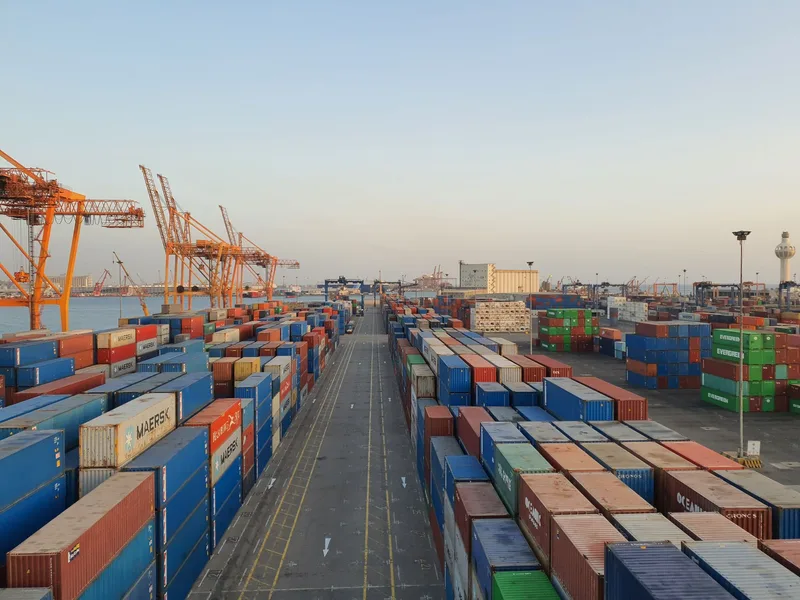
Every commercial shipment from Malaysia into the UAE passes through UAE Customs, administered by the General Authority of Customs. Dubai shipments are processed by Dubai Customs ; Abu Dhabi shipments by Abu Dhabi Customs.
Customs duty rate. The UAE applies the GCC Common External Tariff for most goods. The standard rate is 5% of the CIF (cost plus insurance plus freight) value, meaning duty applies to the product cost plus shipping and insurance (GCC General Secretariat, 2024 ).
Key exceptions to the standard 5% rate:
- Tobacco products: 100% duty rate
- Alcohol: Importation is restricted and subject to high taxes; not a viable export category for most sellers
- Certain foodstuffs: Variable rates depending on HS code classification
- Steel and aluminium: Specific anti-dumping measures may apply for some grades
No Malaysia-UAE free trade agreement. As of mid-2026, Malaysia and the UAE have no bilateral free trade agreement. The Malaysia-UAE CEPA (Comprehensive Economic Partnership Agreement) is under negotiation, but until it enters into force, standard GCC tariff rates apply to Malaysian exports. This means Malaysian sellers do not benefit from preferential duty rates that traders from countries with active GCC FTAs receive.
Product compliance requirements. Beyond customs duty, certain product categories require pre-import compliance approval in the UAE:
- Electronics must carry ESMA (Emirates Authority for Standardisation and Metrology) conformity certification (ECAS marking) for applicable categories
- Food and beverage products require clearance from the UAE Ministry of Climate Change and Environment (MoCCE)
- Cosmetics with health or therapeutic claims require registration with the UAE Ministry of Health and Prevention (MoHAP)
- Children’s products and toys face UAE-specific safety standard requirements
Check applicable compliance requirements for your product category at UAE.gov and the relevant authority’s portal before shipping. Shipments arriving without required compliance documentation are held, returned, or destroyed at the importer’s cost.
Does UAE VAT Apply When Malaysian Sellers Sell to UAE Customers?
UAE VAT is 5%, introduced in January 2018 and administered by the UAE Federal Tax Authority (FTA) . For overseas sellers, the rules differ from UAE-based businesses.
Mandatory VAT registration threshold. An overseas business must register for UAE VAT if its UAE-sourced taxable supplies exceed AED 375,000 in any consecutive 12-month period. Voluntary registration is available from AED 187,500. Below the mandatory threshold, UAE VAT registration is not required for overseas sellers.
Marketplace-facilitated sales. If you sell through Noon or Amazon.ae using their international seller programs, the marketplace typically collects and remits UAE VAT on your behalf. This follows the platform’s role as the deemed supplier under UAE e-commerce VAT rules for imported goods. Check your specific marketplace seller agreement to confirm this applies to your account type, as terms differ by program and change over time.
Direct website sales. If you sell directly to UAE customers through your own website and ship from Malaysia, different rules apply. Once your UAE-directed revenue crosses AED 375,000 annually, you must register with the FTA via the EmaraTax portal , charge 5% VAT to UAE customers, file quarterly VAT returns, and remit collected VAT to the FTA.
Practical implication. Most Malaysian sellers beginning UAE cross-border operations will stay below the mandatory threshold for months or years. Track UAE-directed sales separately from the start — you will need accurate revenue figures when you approach AED 375,000.
Which Marketplace Paths Let Malaysian Sellers Reach UAE Buyers?
UAE consumers are concentrated on a small number of dominant platforms. Two have clear international seller paths.
Noon.com. Noon is the UAE’s largest homegrown marketplace, operating across UAE, Saudi Arabia, and Egypt. Noon accepts international sellers through its seller onboarding portal. Sellers must provide valid business documentation from their home country (SSM registration documents in Malaysia’s case), meet product compliance requirements for their categories, and list products not on Noon’s prohibited list. Noon handles fulfilment for international orders through its logistics network. Commission rates on Noon typically range from 5% to 15% depending on category, per publicly available seller documentation.
Amazon.ae. Amazon.ae is part of Amazon’s global seller network. A registered Amazon seller account can list on Amazon.ae without a UAE entity. For FBA (Fulfilled by Amazon) sellers who place inventory in Amazon’s UAE fulfilment centres, goods must be imported commercially into the UAE at that point, incurring the standard customs duties. For FBM (Fulfilled by Merchant) sellers shipping directly from Malaysia, you fulfil orders yourself and Amazon routes the order to you.
What to prepare before applying to either platform:
- SSM registration certificate (certified copy)
- Business bank account details in Malaysia
- National identity documentation (MyKad for sole proprietors, or director documentation for Sdn Bhd)
- Product photos, descriptions, and HS codes for each listing
- ESMA or other compliance documentation for regulated product categories
Halal certification as a competitive advantage. Malaysian-made halal products have a distinct advantage in the UAE market. The UAE’s import halal certification framework recognises JAKIM (Malaysia’s Department of Islamic Development) certification. Having JAKIM halal certification on food, cosmetics, or health products makes UAE customs clearance and consumer acceptance smoother. This is not required for all categories, but for halal-relevant products it is a competitive differentiator worth pursuing via JAKIM’s halal portal .
What Data Privacy Rules Apply When You Have UAE Customers?
Customer data compliance is an area many cross-border sellers overlook until they receive a regulatory notice.
The UAE’s federal data protection law is the Personal Data Protection Law (PDPL), enacted as Federal Decree-Law No. 45 of 2021, with executive regulations effective from September 2023. Malaysia’s equivalent is the Personal Data Protection Act 2010 (PDPA), administered by the Department of Personal Data Protection (PDPD). Both laws share a consent-based framework but differ in specifics.
When you collect personal data from UAE customers — names, email addresses, shipping addresses, payment information — the UAE PDPL applies to how that data is handled, even if your servers and business are based in Malaysia. Jurisdiction follows the data subject’s location, not the data controller’s location.
Practical steps for a Malaysian seller serving UAE customers:
- Consent: Obtain clear, specific consent for data collection before purchase. Pre-checked opt-in boxes do not satisfy either law.
- Privacy policy: Your website and marketplace storefronts must link to a privacy policy explaining what data you collect, why, and with whom it is shared.
- Cross-border data transfers: If UAE customer data flows to third-party processors (shipping providers, email marketing tools, analytics platforms) outside the UAE, ensure those processors meet adequate data protection standards per the PDPL’s transfer provisions.
- Breach notification: The UAE PDPL requires notification of personal data breaches to affected individuals and the relevant supervisory authority within defined timelines.
For sellers using standard marketplace fulfilment (Noon, Amazon.ae FBA), the marketplace’s privacy terms cover most data handling for marketplace-facilitated transactions. For direct website sales with your own CRM and email marketing setup, you need a compliant consent flow and privacy policy in place before launching.
Malaysia vs UAE Cross-Border Compliance: Full Comparison
| Requirement | Malaysia (Seller’s Base) | UAE (Destination Market) |
|---|---|---|
| Business registration | SSM (ezbiz portal) — RM 30-60 (sole prop) or RM 1,000-3,000 total (Sdn Bhd including secretary fees) | DED trade license (mainland) — typically AED 10,000-30,000/year; or free zone license from AED 5,750/year. Not required for marketplace international seller programs |
| Tax registration threshold | SST: RM 500,000/year taxable turnover (Sales Tax 10%, Service Tax 8%) | UAE VAT: AED 375,000/year UAE-sourced taxable supplies at 5%. Marketplace sales may be handled by the platform |
| Registration required to sell? | Yes — SSM registration mandatory for all businesses | Not required for Noon or Amazon.ae international seller programs. Required for UAE inventory, local entity, or direct B2B invoicing |
| Customs duty | N/A (exporting from Malaysia) | 5% of CIF value under GCC Common External Tariff for most goods; 100% for tobacco; alcohol heavily restricted |
| Import product compliance | Royal Malaysian Customs export declaration | ESMA (electronics); MoCCE (food/beverage); MoHAP (cosmetics with health claims) |
| Halal certification | JAKIM — internationally recognised, competitive advantage for UAE market | JAKIM certification recognised by UAE import authorities for halal-relevant products |
| Data privacy law | PDPA 2010 (PDPD) — consent-based, applies to Malaysian residents’ data | PDPL (Federal Decree-Law No. 45 of 2021, effective Sept 2023) — applies to UAE residents’ data regardless of seller location |
| Currency | MYR (RM) | AED (د.إ) |
Frequently Asked Questions
Do I need a UAE trade license to sell to UAE customers from Malaysia?
Not necessarily. Malaysian sellers can reach UAE buyers through international seller programs on Noon and Amazon.ae without holding a UAE trade license. You ship from Malaysia and the marketplace handles local fulfilment. A UAE mainland trade license or free zone license becomes relevant only if you want to hold inventory in the UAE, open a local marketplace storefront, or invoice UAE businesses directly.
What is the UAE VAT rate and does it apply to Malaysian sellers?
UAE VAT is 5%, introduced in January 2018 and administered by the Federal Tax Authority (FTA). For overseas sellers, VAT registration is mandatory only if UAE-sourced revenue exceeds AED 375,000 per year. Sellers below that threshold are not required to register. When you sell through a UAE marketplace like Noon or Amazon.ae, the marketplace typically collects and remits VAT on your behalf.
What customs duty rate applies to goods shipped from Malaysia to the UAE?
Most goods entering the UAE from Malaysia attract a 5% import duty on the CIF value under the GCC Common External Tariff. Certain categories carry higher rates, including tobacco at 100%. As of mid-2026, there is no free trade agreement between Malaysia and the UAE reducing these standard rates, though a bilateral CEPA is under negotiation.
Which marketplaces let Malaysian sellers list products for UAE buyers?
Noon.com and Amazon.ae are the two dominant platforms in the UAE that accept international sellers. Noon’s marketplace accepts sellers from select countries including Malaysia through its onboarding portal. Amazon.ae is part of the Amazon global seller network, so a registered Amazon seller account from Malaysia can list on Amazon.ae. Both require product compliance with UAE standards for regulated categories.
Does Malaysia’s SSM registration cover cross-border sales to the UAE?
SSM registration covers your legal right to operate a business in Malaysia, including exporting goods. It does not grant you legal status in the UAE. You are exporting from a Malaysian-registered entity, which is the correct structure for cross-border sales without a UAE presence. If you plan to hold UAE inventory, employ staff in the UAE, or invoice UAE businesses locally, you will need a separate UAE business registration.
Keep Reading
- SSM Registration for Online Business in Malaysia
- SST for Ecommerce Sellers in Malaysia
- Selling From Malaysia to Singapore: Legal Requirements
This guide covers general information about cross-border ecommerce legal requirements between Malaysia and the UAE. Regulations, tax rates, and thresholds change. Verify current requirements at SSM , UAE Federal Tax Authority , Dubai Customs , and UAE Ministry of Economy before making compliance decisions. For complex cross-border structures, consult a licensed company secretary or cross-border tax advisor. Last verified: June 2026.